.jpg)
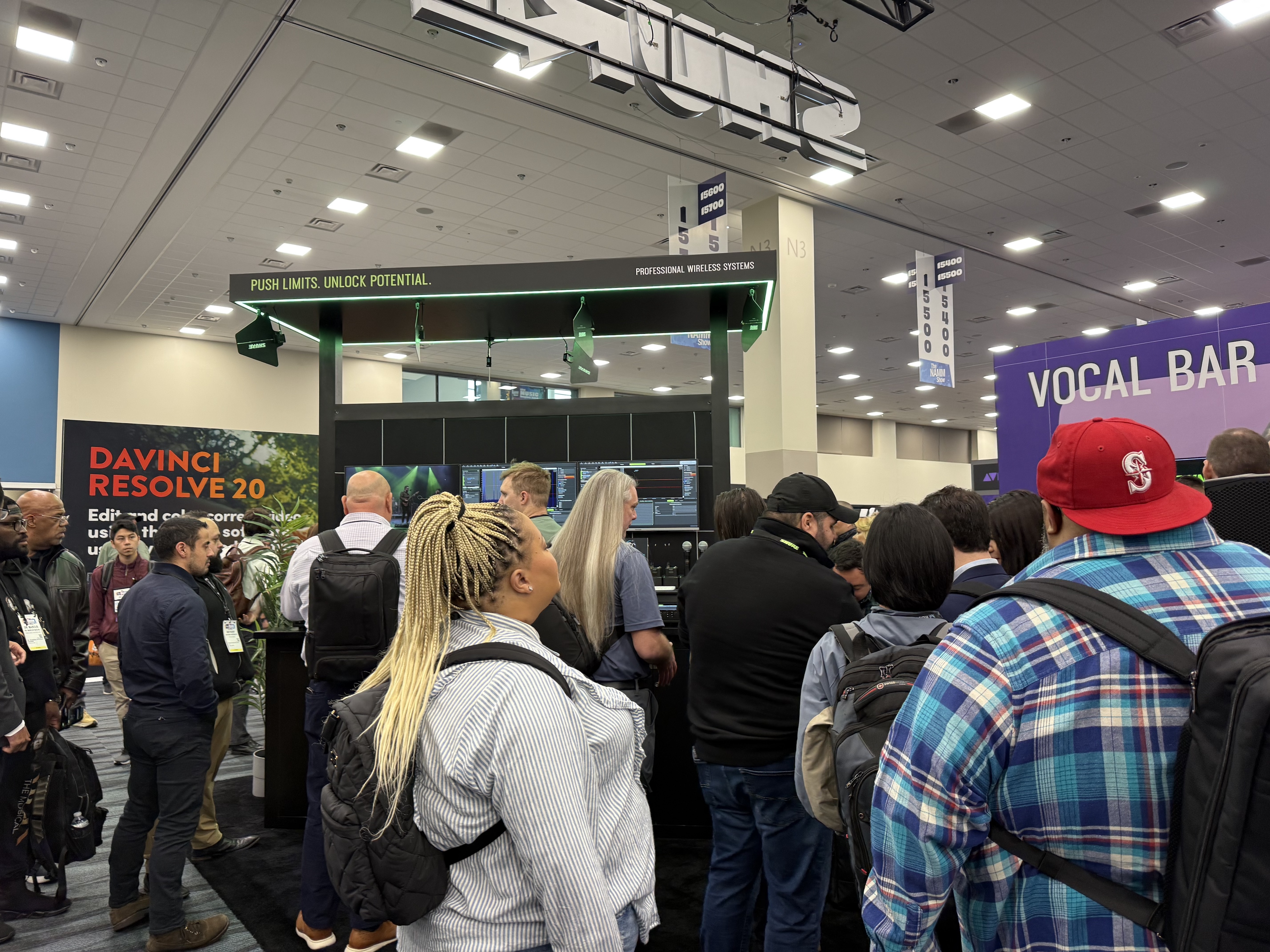
Every trade show floor is a living ecosystem. And like any ecosystem, it has a population — distinct groups of people with different objectives, different success metrics, and different blind spots. Most attendees walk in without a map. They network by accident, miss the conversations that would have mattered most, and leave wondering why the show felt harder than it should have.
This article gives you the map.
We're going to define the eight types of people you will encounter at any trade show, conference, or industry event — and then layer three experience categories across all of them to build a complete attendee matrix. Once you understand where you fit and how everyone else fits around you, the floor stops feeling overwhelming and starts feeling navigable. More than that, it starts feeling like an opportunity.
The eight types of trade show attendees are more distinct than most people realize, and knowing how to identify them changes how you move through a show entirely.
The first type is the exhibiting manufacturer's employee. The person working a booth is not really walking the floor. They are managing a small, exhausting, high-stakes environment for the duration of the show. If you see them moving through the hall, they are either on a break, running an errand, or — if they are senior enough — doing a strategic walk on the last day. They are not available the way you think they are.
The second type is the non-exhibiting manufacturer's employee. This group makes up a significant portion of the floor population and they are doing something very specific: watching. They are tracking trends, monitoring competitors, meeting with partners informally, and assessing the market without the overhead of a booth. They are informed, intentional, and often more accessible than their exhibiting counterparts.
The third type is the domestic reseller. These are the unicorns. The buyers. The people that every exhibitor hopes to connect with because they are the ones who move product into the market. Most resellers do not need booth presence — they walk the floor to meet manufacturers on their own terms, at their own pace, on their own timeline. Treat every conversation with this group accordingly.
The fourth type is the international distributor. Same essential profile as the domestic reseller but operating with more complexity, more asymmetric information, and a higher degree of difficulty in terms of random discovery. You do not stumble into the right international partner. You engineer the meeting in advance or you miss them entirely.
The fifth type is the vendor or supplier targeting exhibitors. Trade shows are a magnet for business in every direction simultaneously, and a significant portion of every floor population is there to sell to the exhibitors rather than alongside them. This group is larger than most organizers acknowledge and more important to the viability of the show than most attendees realize. They are not the romantic story of the event, but they are part of the machinery that keeps it running.
The sixth type is press and content creators. Second only to buyers in terms of strategic value for exhibitors, this group has every fifteen-minute block of the show already scheduled before the doors open. If you want coverage, you schedule the meeting in advance. If you are waiting to bump into a journalist on the floor, you will be waiting a long time.
The seventh type is event staff, speakers, and show talent. These are the people who make the event function. The staff fades into the background by design — their excellence is measured by how little you notice them. The speakers and talent are the public face of the show itself and should be treated as representatives of the event's values and objectives.
The eighth type is the enthusiast or general public attendee. Most industry shows are not technically open to consumers, but the die-hard fans always find a way in. Any person willing to navigate the complexity of an industry-specific show just to be present is an evangelist. They are the origin point of word-of-mouth. Every exhibitor should be honored to spend time with them.
Layered across all eight types are three experience categories that change everything about how a person moves through a show.
Brand new to the industry means exactly what it sounds like. Everything feels overwhelming. The jargon is unfamiliar. The hierarchy is invisible. The unspoken rules have not been decoded yet. This is true whether you are an exhibitor, a reseller, a vendor, or a press member. Every industry's trade show has its own cultural grammar and it takes time to learn it. The discomfort is not a character flaw. It is the cost of entry.
New to the industry means you have been in the space for two to five years and have been to the show a few times. You recognize faces. You have a network. You are not lost, but you are also not yet walking around like you own the room. This is actually a powerful position — you have enough context to be effective and enough hunger to be intentional.
Old hat means you have been here long enough to become part of the event's fabric. You know everyone. Everyone knows you. Your challenge is not discovery — it is not coasting. The old hat who shows up with the same energy as their first year is rare and unforgettable. The old hat who has stopped paying attention is invisible in a different and more permanent way.
When you combine the eight types with the three categories, you have a complete matrix — 24 distinct positions, each with its own strengths, blind spots, and success metrics. The goal is not to memorize all 24. The goal is to know where you stand and to be able to quickly read where everyone else stands.
Here is how to put it into practice.
The first step is to define your own position in the matrix honestly. Not aspirationally. Not how you wish you were positioned. Where you actually are. New vendor. Old hat executive doing a strategic walk. Brand new reseller trying to figure out who the key manufacturers are. First-time speaker representing the event. The clearer you are about your own position, the more focused every conversation becomes.
The second step is to define your objectives with the same clarity. What does success look like for you specifically at this show? Not in general terms — in specific, measurable terms. If you are a reseller, which categories are you actively building? Which brands are on the rise that would add value to your portfolio? The more specific your objective, the more efficiently you can move through the floor.
The third step is to understand that you are part of a dance. Everyone on that floor has a role. The show works because the roles are interdependent. If you are an exhibitor, let the vendors sell to you — they are part of the ecosystem too. If you are a buyer, let the exhibitors do their jobs. If you are a competitor, let the market see what you are building. Resistance to your role in the dance costs everyone energy and produces nothing.
The fourth step is to factor in experience. If you are brand new, do the pregame homework. Talk to teammates who have been before. Reduce your surprise. If you are old hat, transfer that knowledge generously. The most impressive person in any room is not the one who has been there the longest — it is the one who uses that experience to make the room better for everyone else. That is your job when you have seniority.
The fifth step is the simplest and the most powerful. Be direct. When someone asks how your show is going, tell them specifically. Tell them what you are looking for. Tell them what success looks like. You will be surprised how often a stranger will go out of their way to help when you give them a clear target. And you will be genuinely startled by how often the response sounds something like this: "That's funny. I'm the lead buyer for so-and-so and we're actually looking for exactly that." That is not luck. That is the matrix working the way it was always supposed to work — people who know what they need, in a room full of people who can provide it, speaking clearly enough to find each other.
Every show has its own idiosyncrasies. The matrix will not map perfectly to every event. But it will get you close enough to walk in with confidence, move through the floor with purpose, and leave with results that justify the investment — while being a genuinely useful presence for everyone you encounter along the way. That last part matters more than most people think. The attendee who makes the show better for the people around them is the one everyone remembers. And remembering is how this all compounds.
More stories
Sharing honest and practical solutions for your attendees